Vehicle Telematics Coaching: How Fleet Managers Can Use Data to Improve Driver Safety

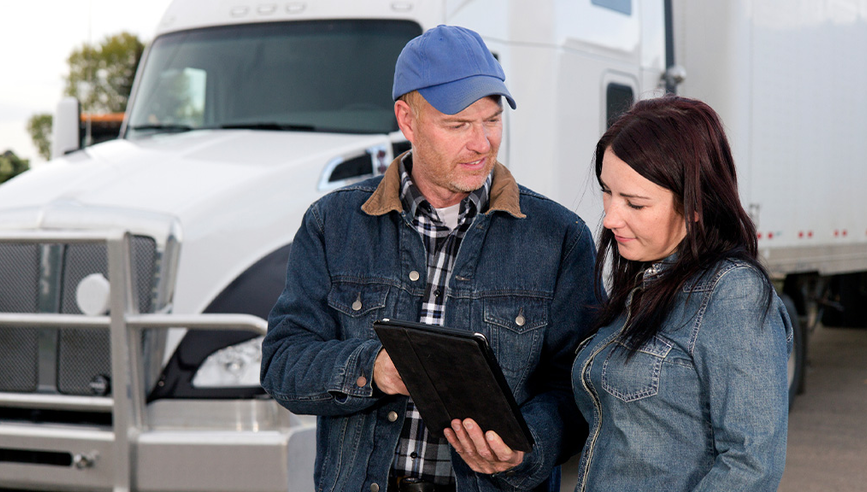
Fleet managers can use vehicle telematics data to help improve driver safety by identifying risky driving behaviors, setting clear performance benchmarks and delivering structured coaching. Commercial vehicle telematics - often referred to as fleet telematics - collects real-time data on behaviors such as speeding, harsh braking and close following, giving managers quantitative, data-driven insights into driving patterns and behaviors.
Through regular review of telematics data and applying insights to targeted coaching conversations, fleet managers can proactively correct unsafe behaviors, reduce accident risk and foster a culture of accountability and continuous improvement across their operations.
What is vehicle telematics?
Vehicle telematics is a technology system that uses GPS, onboard diagnostics (OBD) and integrated sensors to collect and transmit operational data from commercial trucks and fleet vehicles. Also known as fleet tracking or GPS vehicle tracking, telematics gives fleet managers visibility into vehicle movement, driver behavior and overall fleet performance.
Modern telematics systems provide insight into behaviors such as:
- Speeding (compared to posted limits or fleet-defined thresholds)
- Harsh braking and rapid acceleration (measured by g-force sensors)
- Close following and abrupt lane changes (detected through GPS and accelerometer data)*
- Seat belt use (via vehicle sensor integration)
- Excessive idling (tracked through engine diagnostics)
*Note: Some behaviors may require additional camera systems or advanced sensors for reliable detection, depending on system capabilities and GPS accuracy limitations.
In addition to safety applications, fleets may use telematics to improve route planning, monitor fuel efficiency and support dispatch coordination.
How does vehicle telematics work?
Vehicle telematics works by capturing data from trucks through GPS, on-board diagnostics and integrated sensors, then transmitting that information to a centralized platform for analysis and reporting.
While systems vary by provider, most fleet telematics platforms include several core components:
GPS tracking
Provides real-time location, route history and speed data. Systems can compare vehicle speed against posted limits or use geofencing to trigger alerts when a truck enters or leaves a designated area.
On-board diagnostics (OBD) and vehicle sensors
Capture engine performance data, fault codes, fuel usage, seat belt status and other mechanical indicators that support maintenance and compliance monitoring.
Accelerometers and gyroscopes
Detect rapid acceleration, hard braking, sharp cornering and other driving maneuvers by measuring changes in vehicle motion and orientation.
Cameras (inward- and outward-facing)
Capture roadway and in-cab footage, which can support post-incident review and accident reconstruction analysis. Event-triggered clips can help managers review incidents and support coaching conversations.
Dashboards and reporting tools
Organize telematics data into visual summaries, highlight high-risk behaviors and generate driver scorecards for performance tracking.
By combining these technologies, telematics systems give fleet managers both operational visibility and behavioral insight – information that can support proactive coaching and safer driving practices.
What is driver coaching?
Driver coaching is an ongoing process of reviewing driving behaviors and providing structured feedback to reinforce safer habits over time. In commercial trucking fleets, coaching typically uses telematics data, incident reports or direct observation to identify patterns and guide improvement.
Rather than focusing only on discipline after an incident, effective driver coaching emphasizes:
- Early identification of risky behaviors
- Clear performance expectations
- Consistent feedback and follow-up
- Recognition of improvement and safe performance
Driver coaching can take several forms, including:
- A supervisor leading one-on-one coaching sessions to provide individualized feedback.
- Group coaching meetings to reinforce shared safety expectations across the fleet.
- In-cab alerts to provide real-time feedback to drivers during operation.
- Peer discussions to allow drivers to share experiences and safety insights with one another.
- Self-review workflows to give drivers the opportunity to review performance before meeting with a supervisor.
When delivered consistently, driver coaching supports a stronger safety culture and helps fleets address behavioral risks before they escalate.
Driver coaching with telematics
Driver coaching with telematics uses objective driver telematics data to guide structured feedback and performance improvement. Instead of relying solely on complaints or post-incident reviews, fleet managers can use documented driving patterns to identify risks, track progress and reinforce safer behaviors.
By combining behavioral data with consistent coaching conversations, fleets can move from reactive safety management to a more proactive approach.

We’ve seen organizations improve safety performance when they use telematics data effectively. We’ve also seen how much they can learn from that data. Telematics helps trucking companies identify drivers who may be struggling and determine the most effective way to coach them.
Anthony Slamar
Northland Risk Control Safety Specialist
Across commercial trucking fleets, Northland Risk Control specialists often see that transparency and consistency make the difference between driver resistance and driver buy-in. When fleet leaders position telematics as part of a broader safety strategy rather than as a monitoring tool, driver engagement improves and coaching conversations become more productive.
How does driver coaching with telematics help identify at-risk drivers?
Telematics systems highlight patterns that may not be visible through occasional supervision alone. A single hard braking event may not signal a problem. But repeated speeding alerts, frequent close-following incidents or consistent harsh acceleration may indicate behaviors that warrant coaching.
By reviewing trend data over time, fleet safety managers can:
- Identify drivers with recurring high-risk behaviors.
- Prioritize coaching based on severity and frequency.
- Distinguish isolated events from developing patterns.
- Monitor improvement after coaching sessions.
This data-driven approach enables those responsible for overseeing fleets to intervene thoughtfully and consistently – rather than reacting only after a violation or claim.
Vehicle telematics driver coaching guidelines
Driver coaching with vehicle telematics works best when fleet managers introduce the technology transparently, apply consistent standards and use data to support, not discipline, drivers.
Telematics can provide a wealth of operational and behavioral data. Yet how a fleet introduces and manages the technology often determines whether a coaching program succeeds or struggles.
Even well-designed telematics programs can face resistance if drivers think the technology is intrusive or disciplinary. Clear communication and consistent standards help prevent that perception.
Fleet managers can strengthen engagement when they:
- Communicate transparently about what telematics monitors – and what it does not.
- Define how telematics data is used, including when footage or alerts are reviewed.
- Establish privacy safeguards, such as limiting access to driver data.
- Apply standards consistently across drivers and routes.
- Recognize safe driving behaviors and improvement trends, not just violations.
Setting expectations early helps position telematics as a safety and performance tool rather than a monitoring system.
Fleets that approach telematics with structure, fairness and consistency are more likely to gain driver buy-in and sustain long-term safety improvements.
One of the biggest concerns we hear from drivers is that telematics feels like Big Brother is watching. The difference comes down to how fleet safety managers position the use of the data. It’s not about finding fault and punishment. When they are transparent about program expectations and that driver safety is the focus of the coaching, telematics becomes a tool for support, not surveillance.
Anthony Slamar
Northland Risk Control Safety Specialist
How to implement a telematics-driven driver coaching program
Implementing a telematics-driven driver coaching program requires clear goals, defined responsibilities and consistent follow-through. Successful fleets treat truck telematics as part of a structured safety process, not a stand-alone technology.
Many fleets begin with a pilot program to gather feedback before full rollout. Early collaboration helps build driver buy-in and strengthens long-term adoption.
Step 1: Choose the behaviors and metrics to coach.
Start by identifying high-risk driving behaviors that align with your fleet’s safety priorities. In commercial trucking, these may include:
- Speeding thresholds
- Following distance patterns
- Harsh braking frequency
- Rapid acceleration
- Seat belt compliance
Focus on measurable behaviors that your telematics system can track consistently. If your fleet is still evaluating technology options, understanding how to select the right telematics device for your fleet can help ensure that the system supports both operational visibility and driver coaching goals. Avoid monitoring too many metrics at once, which can dilute coaching efforts and create unnecessary friction.
Step 2: Set internal benchmarks and tolerance levels.
Clear benchmarks create fairness and consistency. Define:
- Clear definitions of minor events versus coaching triggers
- Frequency thresholds that require follow-up
- Escalation protocols for repeated behaviors
Review telematics data in context. A single event may not reflect overall performance, especially in variable traffic or weather conditions.
Communicating benchmarks up front helps drivers understand expectations and reduces perceptions of subjectivity.
Step 3: Assign roles and responsibilities.
A telematics coaching program needs defined ownership.
- Define who reviews telematics dashboards.
- Establish how often data is evaluated.
- Identify who conducts coaching sessions.
- Document how coaching outcomes are recorded.
The coach must understand fleet operations, routes and schedules. Access to driver-level data is essential, as is consistent application of standards.
Clear accountability ensures that telematics data translates into meaningful safety action.
Step 4: Establish a coaching cadence and workflow.
Effective coaching follows a predictable rhythm. This may include:
- Real-time in-cab alerts
- Weekly or biweekly check-ins
- Post-incident reviews within 24 to 48 hours
- Quarterly performance summaries
Keep coaching conversations collaborative. Ask drivers about external factors that they believe influenced events, and document agreed-upon next steps.
Consistency in scheduling reinforces that coaching is part of routine operations and not a disciplinary action.
Step 5: Reinforce improvement and set clear goals.
Driver coaching is most effective when it recognizes progress as well as risk.
Strong programs:
- Highlight positive trends in scorecards.
- Acknowledge consistent safe performance.
- Set measurable improvement targets.
- Encourage open discussion about operational challenges.
- Hold supervisors accountable for follow-through.
Recognizing improvement helps build trust and reinforces that telematics supports professional development, not surveillance.
Northland’s safety expertise
Fleet telematics can be a powerful part of a broader safety and risk management strategy. When combined with regular driver coaching, it can help reduce accidents and improve overall fleet performance.
Still, even the best safety programs cannot eliminate every risk on the road. Combining telematics solutions and driver coaching with robust commercial truck insurance coverage creates a strong risk management strategy – one that helps prevent incidents and protects fleet businesses when they happen.
Start by exploring Northland’s Safety Manager Guide for commercial trucking fleets. It outlines practical tools and best practices for strengthening driver coaching programs. Then connect with a Northland agent to review your coverage and learn about resources your company can use to evaluate and train your drivers.